

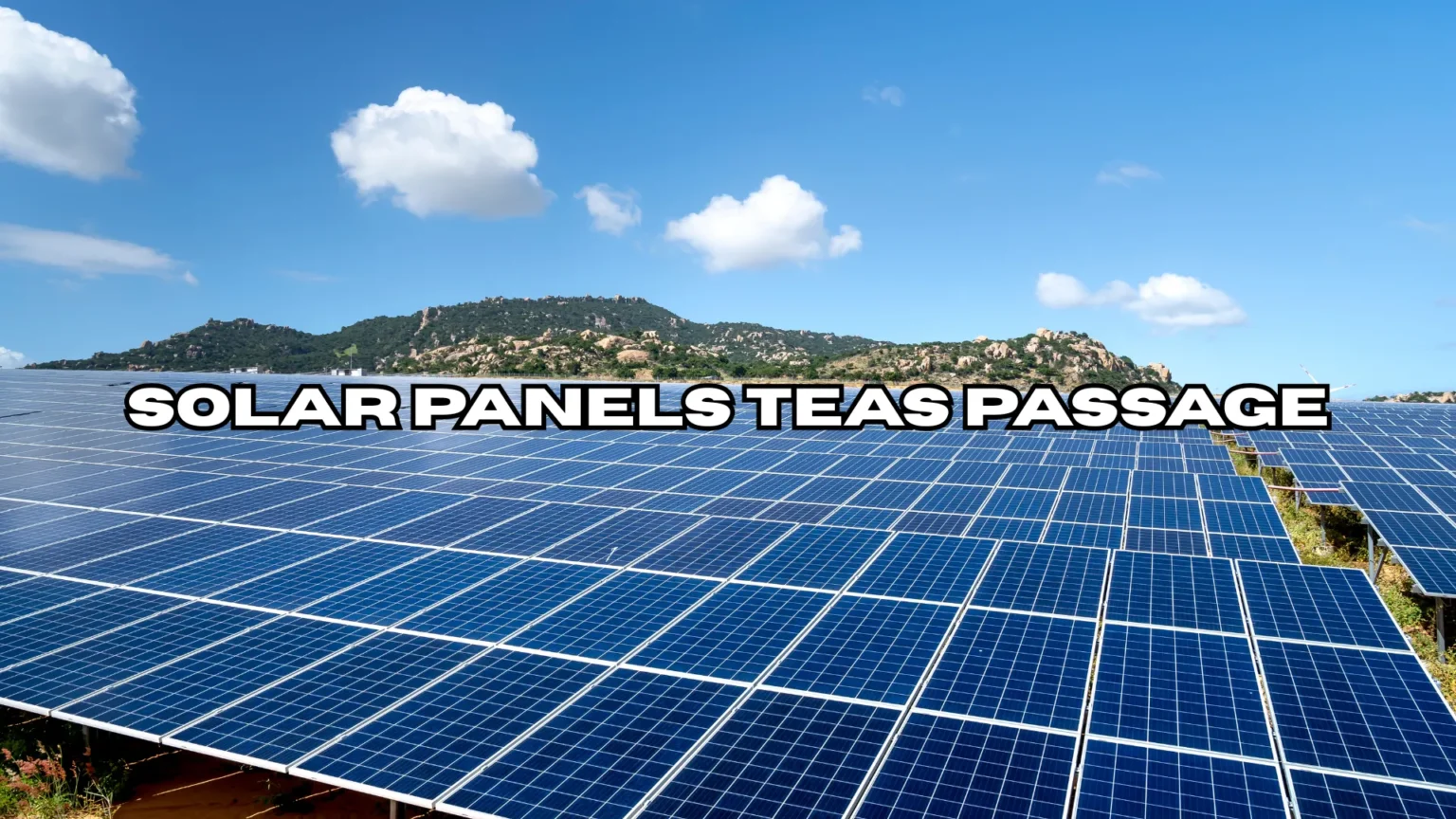

Preparing for the TEAS exam can feel overwhelming, especially when it comes to the Reading section. Among the most common and important topics you’ll encounter is the solar panels TEAS passage, which focuses on renewable energy concepts, scientific explanations, and real-world applications like agrivoltaics. These passages are designed not just to test your reading ability, but also your understanding of how science connects to everyday life.
For US students aiming to enter nursing or healthcare programs, mastering these passages is essential. The TEAS exam emphasizes comprehension, inference, vocabulary, and analytical thinking, all of which are tested through structured passages about solar energy systems, environmental impact, and technological advancements.
This guide will walk you through everything you need to know about the solar panel passage TEAS format. From understanding photovoltaic technology to breaking down passage strategies, practice examples, and common traps, this article provides a complete roadmap to help you score higher and feel confident on exam day.
Understanding the Solar Panels TEAS Passage
The solar panels TEAS passage typically appears as a science-based reading text ranging from 400 to 600 words. It introduces a topic related to renewable energy, often focusing on how solar panels work, their benefits, and their applications in different environments.
These passages are written in an informative tone, meaning they aim to explain rather than persuade. However, subtle opinions or positive framing toward renewable energy may still be present, requiring students to identify the author’s tone and intent.
In most cases, the passage will begin with an introduction to solar energy, followed by a detailed explanation of how photovoltaic systems operate. It may then expand into real-world applications such as residential installations, agricultural use, or historical developments. The conclusion often highlights challenges or future possibilities.
Understanding this structure is key because it helps you quickly identify the main idea and locate important details during the exam.
How Solar Panels Work (Core Concept in TEAS Passages)
At the heart of every solar panels TEAS passage is the explanation of how solar energy is converted into electricity. This concept is essential, and you will almost always encounter it in some form.
Solar panels are made up of photovoltaic cells, which capture sunlight and convert it into electrical energy. When sunlight hits these cells, it excites electrons, creating a flow of electricity known as direct current (DC). However, most homes and devices use alternating current (AC), so this electricity must pass through an inverter to become usable.
This process is often described step-by-step in TEAS passages, making it important for students to follow the sequence carefully. Questions may ask you to identify the role of specific components or explain how energy transformation occurs.
Additionally, passages may mention efficiency levels, typically ranging between 15% and 22% for modern panels. You may also encounter terms like monocrystalline and polycrystalline, which refer to different types of solar cells.
Agrivoltaics: A Popular TEAS Passage Topic
One of the most interesting and frequently tested topics in a solar panel passage TEAS is agrivoltaics. This concept refers to the use of solar panels in agricultural settings, where they are installed above crops to serve a dual purpose.
In many passages, tea plantations are used as an example. Solar panels are elevated several feet above the plants, allowing sunlight to reach the crops while also generating electricity. This setup creates a unique microclimate that reduces evaporation and protects plants from extreme heat.
As a result, crops often require less water and can even produce higher-quality yields. At the same time, the energy generated by the panels can power nearby facilities, reducing reliance on fossil fuels.
TEAS questions related to agrivoltaics often focus on cause-and-effect relationships. For example, you might be asked how shading impacts water usage or why this system is considered sustainable. Understanding the connection between agriculture and energy production is crucial for answering these questions correctly.
Historical Context in Solar Passages
Another angle that frequently appears in solar panels TEAS passages is historical development. These sections provide context about how solar energy has evolved over time, often highlighting key events or policy changes.
A common example includes early government initiatives to promote renewable energy. These passages may describe how solar panels were introduced as part of efforts to reduce dependence on fossil fuels and how political decisions influenced their adoption.
You might also encounter comparisons between past and present technologies, emphasizing improvements in efficiency, cost, and accessibility. Questions based on these sections often test your ability to identify timelines, causes, and outcomes.
Benefits and Challenges of Solar Energy
Most solar panel passage TEAS texts present a balanced view by discussing both advantages and limitations. Understanding this contrast is essential for answering inference and main idea questions.
On the positive side, solar energy is renewable, environmentally friendly, and capable of reducing long-term electricity costs. It produces no greenhouse gas emissions during operation and can significantly lower dependence on traditional energy sources.
However, passages also highlight challenges such as high initial installation costs, dependence on weather conditions, and the need for energy storage systems. Efficiency may decrease on cloudy days, and maintenance can be required in certain environments.
Recognizing this balance helps you avoid common traps in TEAS questions, where extreme answers are often incorrect.
Key Vocabulary You Must Understand
Vocabulary plays a major role in the solar panels TEAS passage. While you are not expected to memorize complex definitions, you should be able to understand terms based on context.
Words like photovoltaic, inverter, efficiency, and renewable are commonly used. You may also encounter technical terms such as bifacial panels, which capture sunlight from both sides, or grid-tied systems, which connect solar panels to the main power grid.
Instead of focusing on memorization, practice identifying meanings through surrounding sentences. This skill is especially useful for vocabulary-based questions on the exam.
Effective Reading Strategies for TEAS Success
Success in the Reading section depends heavily on your approach. When dealing with a solar panels TEAS passage, the first step is to quickly identify the main idea by reading the title and opening paragraph.
Next, scan the structure of the passage. Look for transitions that indicate cause and effect, comparisons, or sequences. Words like “because,” “however,” and “therefore” can guide your understanding of the author’s logic.
As you read, focus on understanding the overall message rather than memorizing details. When answering questions, return to the passage to verify your answers instead of relying on memory.
Time management is also crucial. Each passage should take only a few minutes to read, leaving enough time to carefully answer the questions.
Practice Passage Explanation
Imagine a passage describing a tea plantation that installs solar panels above its crops. The text explains how the panels reduce heat stress, lower water usage, and generate electricity for processing facilities.
From this passage, the main idea would likely focus on the benefits of combining solar energy with agriculture. Supporting details would include statistics about water reduction or energy savings.
If a question asks about the author’s tone, the correct answer would likely indicate a positive or optimistic perspective, as the passage highlights advantages while acknowledging challenges.
This type of practice helps you develop the ability to quickly analyze passages and identify key information.
Common Mistakes to Avoid
Many students lose points on the solar panel passage TEAS because of avoidable errors. One of the most common mistakes is choosing answers that sound correct but are not supported by the text.
Another issue is falling for extreme statements, such as claims that solar energy solves all problems. TEAS passages are usually balanced, so absolute answers are rarely correct.
Students also struggle with inference questions, which require reading between the lines. To answer these correctly, focus on what the passage implies rather than what it explicitly states.
Why Solar Passages Matter for US Students
Solar panels TEAS passages are not just about science; they reflect real-world issues that are highly relevant in the United States. With increasing investment in renewable energy and government incentives, understanding solar technology is becoming more important.
For nursing and healthcare students, these passages also emphasize environmental awareness, which is closely linked to public health. Cleaner energy sources contribute to better air quality and overall well-being.
This broader relevance makes it easier to engage with the material and understand its importance beyond the exam.
Study Plan to Master Solar TEAS Passages
Improving your performance requires consistent practice. Start by reading science-based passages daily to build familiarity with technical language and concepts.
Focus on understanding how passages are structured and practice identifying main ideas quickly. Review your mistakes to identify patterns and improve your strategy.
Over time, your reading speed and comprehension will improve, allowing you to approach the exam with confidence.
Conclusion
The solar panels TEAS passage is a key component of the TEAS Reading section, combining scientific knowledge with critical thinking skills. By understanding how solar panels work, recognizing common themes like agrivoltaics, and applying effective reading strategies, you can significantly improve your performance.
Success comes from practice, attention to detail, and the ability to analyze information quickly. With the right approach, these passages become much easier to navigate, helping you move one step closer to your nursing or healthcare career goals.
FAQs
What is a solar panels TEAS passage?
It is a reading comprehension passage on the TEAS exam that focuses on solar energy concepts, technology, and applications.
How long is the passage?
Most passages are between 400 and 600 words and include around 10 questions.
Do I need to memorize scientific terms?
No, you only need to understand terms based on context within the passage.
What is the best strategy to answer questions?
Focus on the main idea, refer back to the passage, and avoid extreme answer choices.
Are agrivoltaics commonly tested?
Yes, agrivoltaics is a popular topic because it combines science and real-world application.